-->

Sunday, July 18, 2010

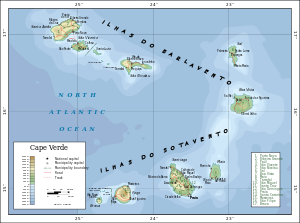
Day 32- Cape Verde(EU) -Cachupinha, Corn and Fava Bean Stew -Up Next, Central African Republic (AF)

 Cape Verdean Cachupinha for Lunch!


Buddy Boy - always ready to lend a paw and unconditionally loyal support to any and all of my nutty pursuits

Heating up the olive oil in over my wondrously awesome cooking pit

I have to apologize up front for a minor technical difficulty. I somehow managed to lose the memory card for my camera somewhere outside while building the fire in my cooking pit. On it, were pictures of the meal preparation, main ingredients and some smokin' good fire building pictures as well. I didn't have time to run out to get a new one, so the following pictures were taken using my video camera which does well outside, but not so well inside as it lacks a flash. Luckily, other than the prep, the cooking and eating of this meal took place outside, so as Mr. Shakespeare said,   "All's well that ends well."  That Bard of Avon knew what was what.


And, a huge thank you to my bff, Lisa who has an amazing green thumb, is phenomenally creative and truly scary-smart,  for providing the yellow squash and zucchini for this meal. You always have a way of making the ordinary, extraordinary :)


Cape Verde (Praia)(EU-Portugal): Cape Verde's national dish is Cachupa,  a stew of hominy and beans with fish or meat, a dish often served for special occasions and feasts. I chose to make Cachupinha instead, a dish that relies less heavily on meat and is eaten on a more regular basis by typical families on any given night (or left over for breakfast).  Plus, I'm kind of on a budget this week,  as we have to fork over our son's college tuition check this week which is enough to make even the most rabid foodie lose her appetite (well, who am I kidding,  almost)...so,  I picked a close second that was a little cheaper to make. I found all the ingredients I needed at Market Basket in Ashland  - I'd be lost without that store! www.marketbasketfoods.com

Linguica, Lisa's yellow squash, zucchini and onions

The main ingredients: fava beans (I shelled them last night), fresh corn, cut off the cob, cilantro, tomatoes, onion, zucchini, squash and linguica
Mango, plantain and Yuca
(for desert)

I used the cast iron pot my brother gave me - added olive oil, then the onions and linguica
Next, I added the corn kernels from 5 years of sweet I bought at ourlocal farm stand
 
Next, I added Lisa's squash and the tomatoes

A  few beautiful close ups, Liam, my in-house photographer,  took of the stew


I added about 2 cups of water to it, and put the lid on to let it simmer away for about 1/2 an hour! The smell of the wood fire and stew were unbelievable! 
The whole meal, including desert which was mango with plantains I'd put on the grill


Cape Verde's dry, tropical island environment and its role in Portugal's 15th-century colonizations have shaped its cooking traditions. Enslaved Africans brought knowledge of growing and cooking tropical crops. The Portuguese brought livestock. They used Cape Verde for feeding the crews of their sailing ships and as an experimental station for growing foods from the Americas, such as corn, hot peppers, pumpkins, and cassava. They also transplanted sugar,bananas, mangos, papayas, and other tropical crops from Asia. For more information, check out this awesome site where I got all the information I need to write this blog entry: http://www1.umassd.edu/specialprograms/caboverde/cvrecipes.html


Vica faba or broad beans, known in the US as f...Broad Beans- I soaked them over night and shelled them this morning - really good!

CACHUPINHA


5 ears fresh corn (or fresh off cob)
1/5 lb. (100 g.) linguica (Portuguese smoked sausage),
sliced 1/4 squash
1/2 lb. (1/4 kg.) fava beans, (or lima beans) fresh or dried &
2 ripe tomatoes (or equivalent tomato paste)
2 tablespoons of olive oil
2 peppercorns
1 bunch of flat leaf coriander
1 large onion, sliced

Scrape off the fresh corn kernels into a boiler pot. Gently saute onion, linguica, and pepper in olive oil. Add to the corn the rest of the ingredients and a sufficient amount of water. Bring to a boil. Reduce heat and let simmer. Prior to serving, season with salt and garnish with chopped flat leaf coriander (cilantro).

Final Assessment: This was a great meal. Easy to make, not labor time intensive and full of flavor. Accompanied by the grilled plantain and fresh mango, it was the perfect summer lunch.


Enhanced by Zemanta

Thursday, July 15, 2010

Day 31-Canada(NA)! Poutine (Fries, gravy & cheese -not for the diet conscioius) - Up Next, Cape Verde (EU)


 " 
Marty McSorley, Canadian Tough Guy, and muse for one of my favorite Kathleen Edwards (also a Canadian tough guy) songs, "I Make the Dough, you get the Glory" 
http://www.youtube.com/watch?v=1m69S1dfrak


Poutine - 'peu-tin' (French Fries with Gravy and Cheese)

First, a disclaimer: Should anyone venture to try this recipe, do not blame me if after the first bite, your arteries instantaneously clog and harden. I suggest indulging in  this snack as one would any sinful temptation: with a pinch of guilt and a gallon of pleasure, making sure not to think about the consequences until after it's a done deal. What he said: "The Devil made me do it."
Flip Wilson

Second, a humble admission: Although I have tried to stay true to the preparation of this recipe, many of these ingredients are only available in Canada. And, while I cannot physically be in our beautiful neighboring country to make Poutine, I shall do my best to transport myself  there in spirit and soul. Does it count that I'm a long suffering hockey mom who gets up at 4 a.m. on  frigid February mornings to drive my son to sub-zero rinks? Can I get some Canadian Cred?  

 Bobby Orr was indeed an iconic Boston Bruin, but he was born in Perry Sound, Ontario
Pictured above, his sister, Sadie (Sarah) Orr

 Alors, mes amis Canadiens, j'espère faire votre beau pays la justice tout en préparant cette recette.


About the Country (the abbreviated version): Covering most of the northern part of the North American continent and with an area larger than that of the United States, Canada has an extremely varied topography.

The first inhabitants of Canada were native Indian peoples, primarily the Inuit (Eskimo). The Norse explorer Leif Eriksson  reached the shores of Canada  in 1000, but the history of the white man in the country actually began in 1497, when John Cabot, an Italian in the service of Henry VII of England, reached Newfoundland or Nova Scotia. Canada was taken for France in 1534 by Jacques Cartier. The actual settlement of New France, as it was then called, began in 1604 at Port Royal in what is now Nova Scotia; in 1608, Quebec was founded.  During the Seven Years' War (1756–1763), England extended its conquest, and the British general James Wolfe won his famous victory over Gen. Louis Montcalm outside Quebec on Sept. 13, 1759. The Treaty of Paris in 1763 gave England control.  In 1849, the right of Canada to self-government was recognized. For a more extensive history of Canada: http://www.infoplease.com/ipa/A0107386.html?pageno=2
  
About the carb 'n fat laden Poutine: Pronounced 'peu-tin', this French Canadian food was conceptualized in Warwick, Quebec and named after restaurateur, Fernand Lachance (I LOVE that name) as a snack food - kind of the U.S. equivalent to McDonald's fries with ketchup.  The word Poutine is Acadian slang for mushy mess. According to many of the websites I visited, Poutine MUST be made using authentic Canadian ingredients and only tastes good when eaten in French Quebec or Maillardville. For example, the gravy is made from a powdered mix (not available in the U.S) and the potatoes must be Prince Edward Island grown. Additionally, it MUST be served in a disposable, Styrofoam bowls or cups. Clearly, I'm going to have to suspend my environmental and dietary beliefs to make this treat. I also came across evidence that Anthony Bourdain (my idol) has prepared and eaten Poutine, and that's good enough for me.Anthony, if you're reading this, my cell # is...

The basic ingredients: Deep fryer, Farmer's Cheese (in lieu of Curd), Russet potatoes (from Montana, not from PI), butter and flour - not pictured, beef broth

Try as I might, I could NOT get fresh curd. I followed a web tip that Whole Foods in Bellingham carried cheese curd, but alas, I was told that they don't carry it because it has a 2-3 day shelf-life and there isn't enough demand. As a close second (unacceptable if you're a purist), I bought some Farmer's cheese - very good, but not the same. Then, I tried to find Russet potatoes from Prince Edward Islands, but the best I could do was Russets from Montana. As for the gravy, I adlibbed  and used a little Gravy Master to add flavor and 
color.

 
Parboil sliced potatoes for 4 minutes, then rinse under cold water and cool completely

Meanwhile make a roux with flour and butter, then add beef stock- I added a splash of Gravy Master for color 
Deep fry potatoes at 360 degrees until beautiful and crispy brown

Drain and place in paper cup-then top with gravy and crumbled cheese
The BIG DOG, Ian, going for more gravy

 
Do I look guilty about feeding my family fat and carb loaded food? Nahhhhh, I know CPR!

 
The world map in my office - a wonderful graphic point of reference!


 Poutine

Ingredients

  • 2 tablespoons butter
  • 2 tablespoons flour
  • 2 cups beef stock
  • Salt
  • Freshly ground black pepper
  • 2 pounds Idaho white potatoes, peeled and cut
  • 1/2 pound fresh cheese curd

Directions

In a saucepan, over medium heat, combine the butter and flour. Stir until incorporated. Cook for 12 to 15 minutes for a dark roux. Stir in the stock. Season with salt and pepper. Bring the liquid to a boil. Reduce the heat to medium low and continue cooking for 15 to 20 minutes. Remove from the heat and keep warm. Peel the potatoes and cut fries, 4 inches by 1/2-inch. Bring a pot of salted water to a boil. Add the potatoes and blanch for 4 minutes. Remove, drain and cool completely. Fry the potatoes until golden brown. Remove and drain on paper towels. Season with salt and pepper. To serve, mound the fries into the individual (16-ounce) disposable cups. Spoon the gravy over the fries and crumble the cheese. Serve immediately.

Final Assessment: Somebody call a cardiologist! We loved it!! Someday I hope to get to Canada to try the real thing.


Wednesday, July 14, 2010

Off the Grid

Off the Grid
Last Friday night I was glad to join the street food revolution, at Off the Grid. Off the Grid takes place Friday nights from 5 pm until 9 pm in the Fort Mason Center parking lot, right near the entrance by the little guardhouse. It's a great mix of carts, people, food and drink. Families, couples and groups can be found mingling, eating, chatting and discovering deliciously affordable bites of food.

Chairman Bao
There was plenty of room to walk around, chairs and a few tables and there was even some live music. There was no overcrowding, significant waits or lines (Chairman Bao had a line but it moved quickly). The most difficult decision may be what to try because with about 10 vendors, there is no way to try it all. They ranged from traditional taco trucks like El Tonayense to the new fangled Creme Brulee cart.

Malaysian food
I started with potato beef curry puffs from Malaysian Lacy Crepes. They were freshly fried to a crisp on the outside with a tender and mid curry on the inside. Like most things, the portion was good for sharing. I want to try their chai banana fritters next.

Chairman Bao buns
I was very impressed with Chairman Bao. I tried both a duck confit and mango bun and the pork belly bun, steamed, $2.75 each. Both were juicy and fresh but I think the crunchy daikon pickle in the pork version made it my favorite. They also have a baked version. Next time!

Adobo chicken
Lee had a cup of chai, which came in various flavors such as rose and vanilla almond. It seemed a bit pricey to me at $4 a cup. Most of the dishes were in the $2 to $6 range. He also approved of the lemon mochi and succulent adobo chicken.

Curry Up Now
The spiciest bites came from Curry Up Now. The Indian street food truck. The Kathi roll made from roti stuffed with pickled onion, chutney and chicken was hot stuff! In the future I'd love to see Chinese dumplings or some kind of noodle dish along the lines of the Noodle Fest in Chinatown. But the variety thus far is terrific and I will be back!

More on Off the Grid:

A Little Yum post

SF Weekly slide show

Yelp reviews

Tuesday, July 13, 2010

Day 30 - Cameroon (AF) - Blue-Coconut Jolofe Rice and Cod Fillets - Up Next, Canada

In the Kitchen - Where it's at! I need a bigger spice rack!!

Cameroon (Yaoundé)(AF) -  Cameroon is located in West Africa.  Comparatively, the area occupied by Cameroon is slightly larger than the state of California. It is bordered on the N and NE by Chad, on the E by the Central African Republic, on the E and S by the Republic of Congo, Gabon, and Equatorial Guinea, on the SW by the Gulf of Guinea (Atlantic Ocean), and on the W and NW by Nigeria. The coastline where fishing is abundant is about 249 miles long.
 First inhabited by the mysterious Pygmies, and then the Bantu and Sudanic peoples, Cameroon became an infamous and tragic source of slaves for Muslim and European traders. Following  a long series of internal political juggling between north and south, along with the bloody coups of the 1980's, Cameroon finally gained independence in the 1990's. The country is ethnically diverse with over 225 individual groups and is blessed with an abundance of natural resources, including in agriculture, mining, forestry, and the oil and gas sectors.

About the Food:

Cuisine in Cameroon includes staple foods like cassava, yam, rice, plantain, potato, maize, beans and millet. The French introduced French bread and Italian pasta, which are not as widely consumed for the price which is very high.
A Typical Open Air Market in Cameroon


The main source of protein in Cameroon is fish, with poultry reserved for special occasions.  Some of the most widely popular species are the pangolin, the porcupine and the giant rat. There is also a thriving trade in such exotic bush meat species as chimpanzee and gorilla - none of which are carried by my preferred exotic meat vendor, D'Artagnan in New Jersey http://www.dartagnan.com/

Cameroon's national dish is Ndole (Vernonia amygdalina) which is made from a very bitter leaf that is not available in the US  and requires a complicated and fascinating process of "washing", in order to reduce the bitterness. If I were to make it, I'd have to use Kale or another bitter green. Instead, I decided to make a rice dish accompanied by Cod, both very commonly eaten by families in Cameroon.

The basic ingredients rice, coconut milk, carrots, ginger, onion, green pepper, hot pepper flakes, bay leaf, mushrooms and tomatoes

Dice up the vegetables
  
Add Coconut milk to tomato mixture and simmer to reduce till thick
Add remainder of vegetables and rice, cover and simmer till liquid is absorbed
Coat fish with flour and fry in peanut oil till golden

Beautiful and Golden brown - don't over cook!
Finis!


Blue-Coconut Jolofe Rice  
http://www.africanafood.com/recipescameroonbluecoconutjolof.htm

1 Onion, chopped
2 tablespoons peanut oil
4 tomatoes, peeled and chopped
1 teaspoon tomato puree
1 1/4 cup coconut milk
2 carrots, peeled and diced
1 small slice ginger, finely chopped
1 bayleaf
1 1/4 cup long-grain rice, washed
1/4 pound Mushrooms, sliced
1 small green pepper, seeded and chopped
hot pepper, to taste
salt, to taste. 

 
Fry the Onion in hot oil, in a large saucepan, for a few minutes.
Add the tomatoes and tomato puree. While stirring, fry over a moderate heat for 5 - 6 minutes.
Stir in 1/4 cup of the coconut milk and continue to cook until the mixture is reduced and thick.
Add the rest of the coconut milk, carrots, hot pepper, ginger, bay leaf and salt.
Bring to the boil, and add the rice and the remaining vegetables, stirring with a fork.
Reduce to a low heat, cover and cook until the rice has absorbed most of the liquid. Remove the lid, cover with foil and replace the lid until the rice is done.

Final Assessment:  The cod was great and the perfect accompaniment to the rice dish. The rice was full of flavor had a great kick to it (I added plenty of hot pepper flakes). There were NO left overs from this meal!

Sunday, July 11, 2010

Day 29 - Cambodia (AS) - Amok Trei: Coconut Fish Curry Parcels in Banana Leaves - Up Next, Cameroon (AF)

It's a Family Affair....It's a Family Affair

Family, family, family. As my wonderful Sicilian friend and neighbor, Lina says, "family is everything."

This Cambodian  meal was cooked on Martha's Vineyard with my brother, Clay. Back up , both technical and emotional, was unconditionally supplied by my beautiful sister Anna, Liam, Ian, Tim, Evie, Mom and Michael as well as my life long best friend, Sarah and her rockin' husband, Ted. I love you all. A la famille!


The history of Cambodia is intricately linked to both Laos and Vietnam. In modern times Cambodia was part of the French Colonial empire, taken over by the Japanese during World War II. After the war, the French returned but granted Cambodia independence in 1953, with Prince Norodom Sihanouk as Chief of State in the capital at Phnom Penh. The Geneva Accords of 1954, that ended the first Indo China War with the French, divided Vietnam at the 17th parallel and also confirmed the status of Cambodia and Laos as independent states.   
No Comment
 In March 1969, in violation of the Geneva Accords and without informing Congress, the Nixon administration began the secret B-52 bombing of North Vietnam's Cambodian bases, the "Menu Series" of raids. Sihanouk did not object to these raids since he had his own worries with the rise of Communist power within Cambodia. The B-52s flew 3,630 sorties over Cambodia during Menu Series using various deceptions and false reports to maintain the fiction that only S. Vietnam was being bombed.
http://www.olive-drab.com/od_history_vietnam_cambodia.php

The Vietnam War is the first war I remember being aware of as a child growing up in Cambridge in the 60's.   To this day, it's effects continue to be felt by families whose fathers, sons, brothers and sisters are still considered POW/MIA.  Anyone who has visited the Vietnam Memorial in Washington, DC can't help but be overwhelmed by the sacrifice our young soldiers made in this illegal war - and now, of course, the Iraq and Afghanistan wars continue to claim thousands of brave American lives....but....that's another blog....

About Cambodian Cuisine:  Cambodia is situated in South East Asia and has borders with Vietnam, Laos and Thailand. It consists of mainly flat low lying plains, mountainous regions in the north and southwest. Its coastline of 443 km and a huge freshwater lake play important roles in the cuisine.

Cambodian cuisine could be described as Thai without the heat,  although this is somewhat of a simplistic way to describe its true nature. It takes some of the best qualities from Chinese, Indian and Thai cuisines and blends them into a unique and delicious culinary experience. Rice, fish and seafood were the main staple in their diet.

I chose to make Cambodia's National Dish, Amok Trei, Coconut Curry Fish Parcels. I'd never cooked with banana leaves. I went to the Asian Market (that's what it's called) in Westborough to get all the ingredients as few of them were available in my local grocery store. I brought them over on the boat to the Vineyard and prepared the meal in my Mom's beautiful kitchen. Here's how it all went down!
Basic Ingredients: Banana leaves, Ganlanga root, fish sauce, shrimp paste, lemon grass, coconut milk and noodles
Chop baby bok choi (from Mom's garden!) and spinach along with medallions of cod bought that morning at Larsen's Fish Market in Menemsha (thank you Betsy!)

 
I decided to add the zest and juice of 4 limes to the recipe (which it didn't call for, but I highly recommend)
Clay, on point! Put red onion, Galanga root, lime, garlic, lemon grass fish oil, shrimp paste, turmeric, sugar and coconut milk in food processor
Process, (the blender would have worked better),  then cook it on a simmer till it's reduced and thickened
Pour 1/2 hot curry sauce of over fish to poach (kind of like making Seviche)

 
My brother, Clay and sister, Anna unfolding the banana leaves, which we cut into 8" squares for the packet,  then filled with a spoonful each of spinach/bok choi, fish, and curry sauce before folding into individual packets.
We didn't have a steamer, so I improvised and put about 2" of water in the bottom of a roasting pan, placed 2 racks in the bottom, placed the banana packets on top, covered with foil and steamed in a 325 oven for 30(ish) minutes. Also, I tripled the recipe to feed 12 of us - 3 pounds of fish was perfect.

 
The meal, which I served with a green salad

 
The whole crew enjoying a beautiful meal outside


Coconut  Fish Curry Parcels  - Amok Trei
 
Serves 4  

Ingredients 
1 Garlic Clove, chopped
1 Red Onion, chopped
5cm/2-inches fresh Root Galangal, chopped or ½ teasp Ground Galangal
2 tbsp chopped Lemon Grass or 2 teasp Ground Lemon Grass
½ teasp Ground Turmeric
1 teasp Paprika
2 tbsp Fish Sauce
1 tbsp Sugar
½ teasp salt
1 x 400g/14oz  tin Coconut Milk
450g/1lb White Fish Fillets, e.g. (Catfish, Cod, Haddock, Sole, Orange Roughy)
4-8 Banana leaves (depending on size)  or or 8 large Dark Green Cabbage Leaves

Instructions

1. Place the garlic, onion, galangal, lemon grass, turmeric, paprika, fish sauce and sugar in a blender or food processor and process until well blended.

2. Add the coconut milk and process again until thoroughly mixed.
 
3. Transfer the coconut mixture to a medium saucepan and bring to simmering point, stirring. Continue to cook gently for about 10 minutes until thickened.

4. Meanwhile, if using cabbage greens, place them in a large saucepan,  cover with boiling water and set aside to soften. If using banana leaves, cut into pieces about 20cm/8-inches square.
 
5. Place the fish in a bowl, season with a little salt then pour over half the hot coconut sauce and mix well. Set the remaining sauce aside.

6. Place 1/8th of the fish mixture in the centre of each leaf and fold the edges over to form secure parcels, making sure you tuck the edges under.  Steam the parcels for 1 hour.

7. 5 minutes before the end of the cooking time, gently reheat the remaining sauce.
 
8. To serve - make a small opening down the centre of each parcel and spoon the remaining coconut sauce into the opening. Serve immediately with rice.

Final Assessment: This was a wonderful dish! Light, filling, full of interesting flavors and really fun to make. It's one of those dishes that will improve with practice and improvisation. I loved serving it with noodles, although rice would have been fine. And, the leftovers were just as good cold the next day!