-->

Thursday, January 5, 2012

Sweet Treats for January

It's January and while Christmas cookie season is officially over, some of us still need a treat before Valentine's Day rolls around....


When I was offered samples of Almondina cookies I was happy to accept. I'm already a big fan of these crunchy cookie crisps with chewy bits of fruit. But I had no idea how many flavors there were. I have always bought the original version which has almonds and raisins. Like a very thin style of Italian biscotti, they are hard and crunchy but some have a chewy bit of fruit like raisins or cherries. They also come in a bran version that I think would be particularly good for breakfast. The spice versions of the cooke in cinnaroma, gingerspice and pumpkin spice are all great, so are the chocolate ones, and still only about 100 calories for 3.

Almondina cookies are perfect for those who are trying to eat healthier. They are so low in sugar, they actually make a very good cookie to add to a cheese plate. There is no butter or oil in the base recipe, so the only fat in the cookies comes from nuts, seeds or grains. I highly recommend them.

Win free cookies from Almondina! Contest now on their Facebook page.


Another treat this month has got to be King cake. It is associated with Epiphany and Christmas in Europe and is a Mardi Gras specialty in the Gulf states. Generally speaking, it's one of the most garish looking cakes I've ever seen.

Sadly many versions of it are not very good, but the version from Sucré in New Orleans is worth seeking out and easily available by mail order. First of all it's quite pretty compared to the usual cakes splashed with gobs of white icing and plenty of gold, green and purple sparkles. It has a subdued sheen and iridescent shine. But best of all, it is not mushy and bland as some King cakes are, but is a delicate coffeecake with a restrained swirl of cinnamon and traces of cream cheese. Perfect with a cup of coffee or tea.

My thanks to both Almondina and Sucre Bakery for sending me samples.

Cucumber Sandwiches


Cucumbers are an unappreciated vegetable, oftentimes just tossed haphazardly into salads.  Recently, Seth and I ordered sandwiches from a deli that seemed promising.  Though the thickly-packed sandwiches were a bit lackluster in flavor, we couldn't get enough of the big, fresh chunks of cucumber hidden within.  Bright, crunchy, and delicious, this vegetable became the star of the show, and we found ourselves hoping to encounter more cucumber with each bite.  In tribute, here is a cucumber sandwich recipe to celebrate its secret awesomeness.

Ingredients
1 loaf rye bread
1 English cucumber, sliced
8 oz cream cheese, room temperature
4 tablespoons butter, softened
dash Worcestershire sauce
¼ teaspoon garlic powder
1/8 teaspoon onion powder
1/8 teaspoon paprika
fresh parsley sprigs
lemon wedges
kosher salt and freshly ground black pepper, to taste

Instructions
Beat the cream cheese, butter, Worcestershire sauce, garlic powder, onion powder, and paprika.  Spread some mixture on a slice of rye bread.  Place slices of cucumber on top of the mixture.  Add sprigs of parsley to the top of the cucumber.  Sprinkle some fresh lemon juice, salt, and pepper on top of that.  Place another slice of bread on top, and cut off the crusts. 

Sunday, January 1, 2012

Day 177! Tanzania~Mango and Lime Curd Tartlets - Up Next, Togo


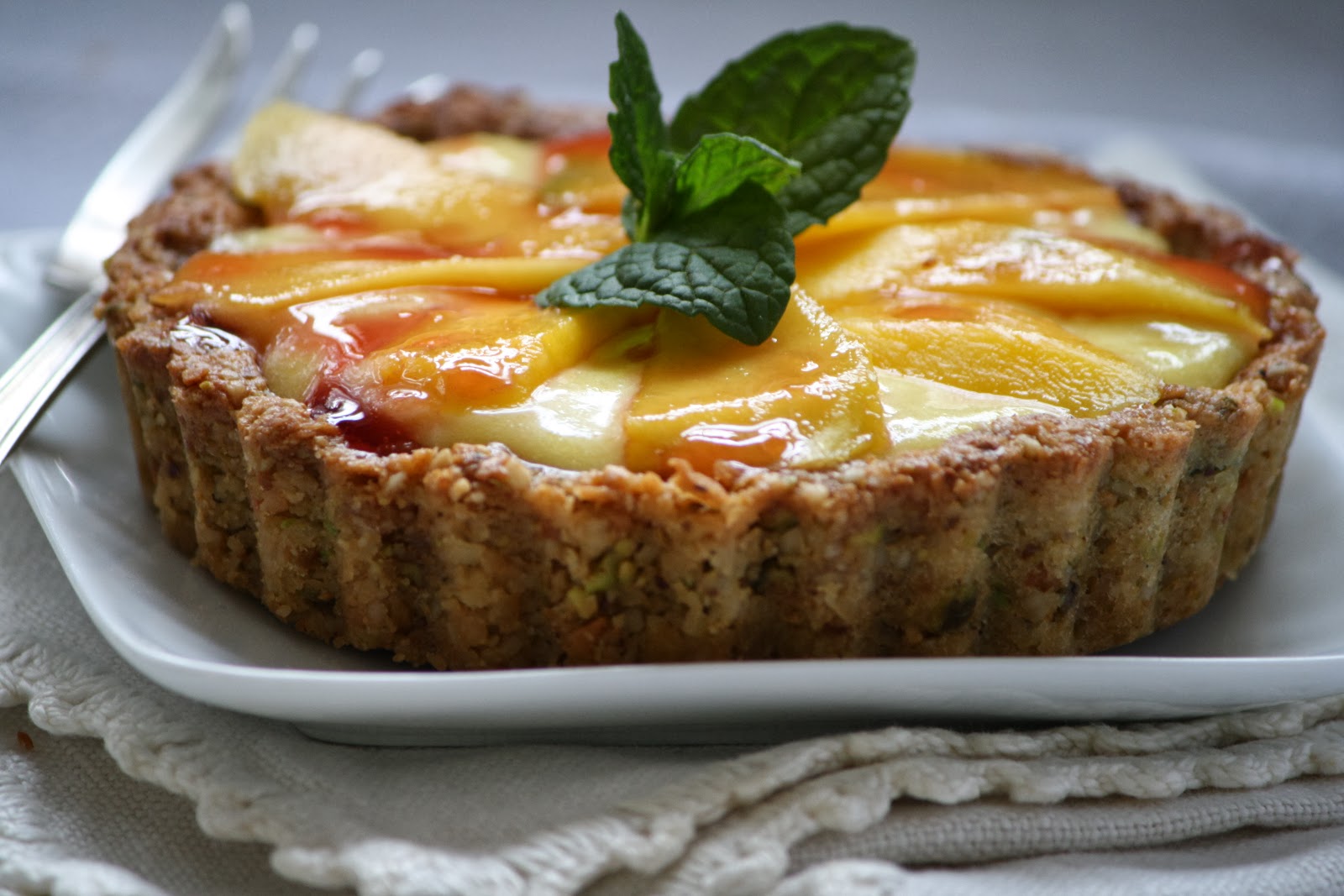
When a girl comes across a recipe for Tanzanian tartlets from the beautiful island of Zanzibar that calls for mango, brown sugar and lime curd with a macadamia, pistachio and coconut crust, there's only one thing to do. Make them and immediately hide them from the human eating machines who tromp around the house in sagged pants and size 11 Timberland's. In the spirit of full disclosure...I know we're all supposed to be eschewing sweets, fat and cholesterol with the advent of the New Year, but alas, this is a recipe you should not turn your back (or hips and thighs) on. My advice, lest you choose to have it in favor of, say, an orange (no disrespect meant to the zesty and beautiful fruit), is that you go for it, but only have ONE tartlet - or maybe two...then skip sweets for the rest of the week. Trust me, you won't be sorry.

An East African country formed from two sovereign states, Tanganyika and Zanibar in 1964, the country borders Kenya, Uganda, Rwanda, Burundi, the Democratic Republic of Congo, Zambia, Malawi, and Mozambique as well as the Indian Ocean to the east. This beautiful country, which is comprised of 26 regions, including the autonomous region of Zanzibar, is known to have some of the oldest inhabitants in the world, the island of Zanzibar sheltering migrants looking for seasonal fishing from the mainland before the birth of Christ. The country's history of trade with Arabia dates back centuries, as does trade with Portuguese and Indian merchants and the French who who imported slaves from Kilwa. Swahili and English are spoken in the country, with the majority population being Christian, followed by Muslim and indigenous people.Tanzania's spectacular landscape boasts islands, coast plains and highlands. The country has the earth's largest concentration of wild animals, along with protected conservation land and pristine, sandy beaches. It is also home the world's highest snow-capped mountain, Mount Kilimanjaro. A largely aggricultural economy, one of the world's largest and most powerful heat blast furnace capable of forging carbon steel (a natural resouce in Tanzania), was invented in this country and has served as model to other industrialized nations.

Cuisine varies greatly from interior to coastal regions. For the most part, food is spicy with extensive use of coconut milk, rice, ugali (maize poridge), chapati (bread), grilled meat, fish, plantain, pilau, okra, spinach, green peas, bean and cassava leaves. On the island of Zanzibar, Arab, Portuguese, Indian, British and Chinese influences are found and coconut, mango, citrus, rice, and nuts are used in cooking.

About this recipe: I suspect that this a "special ocassion" recipe, reserved for parties and celebrations, and is not a typical Tanzanian dessert. That said, the ingredients used do reflect many of the staples used in everyday cooking. And, wow ~ if you want to impress or shower someone special with a decadent, exotic treat, this is the one. Enjoy!


The crust: pistachios, roasted macadamia nuts, brown sugar, coconut and egg whites ~ shazam!
 Pulse nuts, coconut and brown sugar in a food processor until fine, then fold in egg whites
 Press into tartlet pans (use plastic wrap, as the dough is sticky)
Bake until golden brown and puffy ~ cool on a wire rack
I used almost an entire bag of limes to get roughly 3/4 of a cup of juice
 There are other types of squeezers, but I only have ye old lemon/lime reamer and it's fine
 Combine egg yolks, sugar and lime, then place over simmering water and whisk until thick
 As if that weren't enough, add 7 Tbsp. of butter and whisk until melted ~Lime curd is sexy
I let 2 mangoes sit on a sunny window sill for a few days so they'd be ripe to perfection
 Spoon curd into tartlets, arrange mangoes ontop, then brush with warm red currant jelly
 A rich, nutty, coconut crust, zesty, rich lime curd and mango? Yes, please!

Mango and Lime Curd Tartlets (Recipe Adapted from Celtnet)

Ingredients For the pastry
2-1/2 cups (350g) roast macadamia nuts
3 cups (300g) sweetened shredded coconut
2 cups (200g) shelled pistachio nuts
1/3 cup (90g) brown sugar 3 large egg whites

For the Curd 
1 cup (200g) sugar
3/4 cup (180ml) freshly-squeezed lime juice
10 large egg yolks
7 Tbsp. (100g) chilled, unsalted, butter cut into small cubes
2 mangoes, peeled and sliced
1/3 cup (60ml) red currant jelly (or guava jelly if you can get it). Quince jelly also works

Combine the macadamia nuts, coconut, pistachios and brown sugar together in a food process and continue processing until the nuts are all finely chopped before transferring to a bowl.
Meanwhile beat the egg whites together until they form stiff peaks. Fold the egg white mixture into the nut mixture (Add about a third at a time).
When done allow the mixture to stand for 10 minutes.
Meanwhile grease about 8 x 10cm tartlet pans (the ones with removable bottoms) and when ready use plastic wrap to press about 1/3 cup of the nut mixture onto the bottoms and up the sides of your prepared tartlet pans.
Place the pans on a baking sheet and place in an oven pre-heated to 350 F and bake until the crusts are puffed and begin to brown (about 20 minutes).
Take the pans out of the oven and allow to cool for 5 minutes before carefully removing the pan sides.
Transfer to a wire rack and allow to cool completely.
Meanwhile, make the lime curd by whisking together the sugar, lime juice and egg yolks in a large metal or heat-resistant glass bowl.
Set this bowl over a saucepan of simmering water (the bottom of the bowl should not touch the water surface) and with constant whisking cook until the mixture thickens and a confectioner's thermometer reads 180 F (82C) - this will take about 9 minutes.
Remove the bowl from the heat at this point and gradually add the chilled butter, whisking until all the butter has melted and has incorporated thoroughly into the mix. To prevent a skin press plastic wrap directly onto the curd's surface then allow to cool and refrigerated for about 3 hours, until completely cold.
Fill each pie crust with 5 tbsp of the lime curd then arrange the mango slices on top (a decorative fan looks nice).
Whisk the jelly in a pan over a low flame until it melts then brush a little over the mango slices.
Place the prepared tartlets in the fridge for at least 3 hours before serving.


© 2010-2011, What's Cooking in Your World? Sarah Commerford/All Rights Reserved

Friday, December 30, 2011

2012 Food & Dining Trends

In no particular order, here are my predictions with a tiny sprinkling of wishful thinking...

Yes, please!


More transparency and labeling in the food system
Have you been to a supermarket lately? All the seafood is now labeled so you know where it comes from and whether or not it is farmed and if color is added. That is amazing considering that not long ago seafood had barely any labeling at all, but it's just the beginning. I believe consumers will demand labels on produce and meat too. Food contamination and security issues are only a few of the issues driving this trend.


Foraging, hunting and wild food
Wild and foraged ingredients are showing up on more and more menus and there are classes and books to help you learn about this return to a more primal way of eating. The poster boy for this trend is Hank Shaw. The poster Girl? Georgia Pellegrini!

Local culture on the plate
Rene Redzepi the chef at NOMA, (the world's number one restaurant according to one survey) has inspired countless chefs and delighted diners. He uses local ingredients to create a unique cuisine that is a reflection of a singular time and place. This is where high end dining is going. Something that can only be found in one spot is the ultimate in exclusivity.

Honey
The world's first sweetener and a product from bees who we are dependent upon for pollination of fruits and vegetables from avocados to watermelon. Bees have already been in the news because of colony collapse but I think their honey will get some more attention soon too, now that the scandal of widespread bogus honey has been revealed. Honey is an unrefined sugar and a true expression of flora. Trying and learning about honey is as exciting and never ending as learning about wine or coffee.


Digital cookbooks
Epicurious is leading the way here with ecookbooks, offering a variety of best selling cookbooks you can now save to your "recipe box." Since we are already using our computers in the kitchen and to look for recipes, this makes a lot of sense. It makes finding, sharing and using recipes much easier.

Lamb, goat, rabbit and bison
I'm sorry to disappoint any vegan activists, but it's just not likely that Americans are going to give up eating meat. However I do believe they are going to think about sustainability and start making more informed choices. Goat is the most popular meat in the world, we already love goat cheese, the meat can't be far behind. Likewise lamb, rabbit and bison represent more sustainable and ecologically friendly choices than industrially raised pork, beef or chicken.


Chia
I'm seeing chia everywhere. It's a fascinating seed, considered a superfood by some, loaded with vitamins and minerals, omega-3 fatty acids, protein and fiber. It creates an amazing gel like texture but can also be used like a grain in baked goods. I hope chefs are as inspired to play with it as I am.

Chefs doing good
As we get more and more tired of the endless self promotion associated with celebrity chefs (not to mention some food bloggers) I think chef charities will gain in visibility as a way of chefs getting limelight, but for all the right reasons. Great examples include the Mario Batali Foundation, Jamie Oliver Foundation which includes Fifteen and the Ministry of Food, and Rachael Ray's Yum-o!

Handmade sodas
More and more restaurants are offering housemade soda as a non-alcoholic option. Sophisticated and not overly sweet, I expect we will see a lot more of them. Some good local ones try include Jesse Friedman's seasonal offerings from SodaCraft.

Deli
Perhaps the David Sax book Save the Deli led to a resurgence in interest in Jewish delicatessen food. While LA style Wise Sons Jewish Delicatessen failed to knock my socks off, the excitement over their pop-ups indicates a real desire for it. I do believe good deli is on it's way. Perhaps it's the new charcuterie?

Lower alcohol wines
I think this year in Napa might be the turning point. It was a cooler than normal growing season and vintners found that lower brix in this year's vintage meant an opportunity to craft more elegant and lower alcohol wines. We will see how consumers react. But I hope they can learn to appreciate something beyond the big fruit bombs Napa has become known for producing.

Small plate breakfasts
Ok I admit it, this is wishful thinking. But a girl can dream can't she? After having the most spectacular brunch ever at Michael's Genuine in Miami, I just hope this idea catches on. Imagine instead of a big stack of pancakes, just one. Plus a single egg benedict, and a house made pop tart? Heaven.

The other Mediterranean
Perhaps I am just inspired by my trip to Morocco, but I can't help think that Moroccan, Egyptian, Tunisian, Algerian, Lebanese and Turkish food will be on the rise. They are part of the Mediterranean but often get overlooked in favor of French, Italian and Spanish cuisine. Think of them as the new frontier. At very least, recently released cookbooks by Mourad Lalou and Paula Wolfert will fuel the interest in Moroccan flavors.


No thanks, I've had enough


Bacon
When bacon made it's way into lip balm, I think it jumped the shark. It's not that bacon will ever go away, but I think we are ready for something else. Kale perhaps?

"Farm-to-table" "natural" and "artisanal"
They have all become virtually meaningless. When is food not farm to table? When it's factory to table? Natural has no legal meaning and once Round Table Pizza used the word artisan to boost sales, we knew it was over.

Celebrity chefs
Perhaps it all started with that iconic Gourmet magazine cover of chefs as rock stars. But enough is enough. The endless self-promotion has gotten tiresome. So have celebrity chef feuds.

Agave syrup
I never really understood the hype. This may be a marginally better type of sugar, but it's still sugar. It lacks the depth of molasses, sorghum or honey. There are some benefits, but they aren't enough to convince me to use it.

Mexican coke
Admit it, hipsters drink it because they think it's cool. Gimme a break. It's not cool. It's sugar water for chrissake. Hopefully this is the year they will stop paying $5 a bottle for it.

So what do you think the trends will be? Share your thoughts in the comments!

Wednesday, December 28, 2011

Day 176! Tajikistan - Non (Tajik Flat Bread with Shallots) and Chickpea Onion Stew (Vegetarian) Up Next, Tanzania


Having recently emerged from a Holiday induced food coma, I am happy to be returning to my worldly travels. After two months of construction, we are back in our house at long last, so all is right with world. The biggest Christmas surprise was that Santa brought me studio lights so that I can actually shoot food when it's dark or raining and natural light is not available (not used here, because I don't have the slightest clue how to work them yet). Somehow, I think my husband was getting tired of  having "dinner" at 3:00 in the afternoon while I madly scrambled to cook, shoot and plate the dish before the sunset at 3:30. Thank you Liam, Santa, I love you more than risotto. Which is a way lot.


A mountainous, landlocked country in Central Asia, Tajikistan is bordered by Afghanistan, Uzbekistan, Kyrgyzstan and China. The narrow Wakhan Corridor also separates Tajikistan from Pakistan. This country's ancient roots are grounded in the Sogdiana and Bactria civilization. The majority ethnic group are the Persian speaking Tajiks, who share their beautiful language, culture and history with Afghanistan and Iran. Once part of the Samarid Empire, the country became a constituent republic of the Soviet Union during the 20th Century. In 1990, the country was beset but a bloody civil war that claimed more than 50,000 lives. Today, the country's people have forged ahead to rebuild their lives, but the economy remains a fragile one. The primary source of economic revenue comes from aluminum production, boasting one of the largest production plants in the world.

According to The Lonely Planet, one of my favorite travel sites on the web, the country offers breath-taking scenic views. The capital city of Dshambe, is considered one the world's prettiest, along with the city of Penjikent, which was a prominent stop along the Silk Road. Food in this country is closely linked to Russian, Iranian, Afghan and Uzbek traditions. Plov, a layered rice dish and green tea are the country's national dish and drink. Dairy, yogurt, Kaymak, and kefir are enjoyed in cooking and as breakfast and snack food. Grapes, melons, pomegranates, apricots, plums, peaches, apples, pears, figs and persimmons can all be found in the open air bazaars.


The basics: Whole wheat and white flour, yogurt, yeast sugar, salt and water
 Heat water and yogurt, then add to proofed yeast
 My awesome step-dad gave me this lovely old bowl for Christmas ~ xox, Michael
 Finely chop shallots - Every time I cook with them, I wonder why I don't more often
 After dough has risen, gently punch down 
 Turn out onto a lightly floured surface and divide in eight equal pieces
 I used a fork to poke holes in the center, then add shallots, a pinch of salt and a sprinkle of water
 Bake until golden brown...mmm
 Stack of Tajik non joy
Tajik chickpea and onion stew - I used canned chick peas
 I used two large onions and two ripe tomatoes
 Red chilies, coriander, saffron, cumin, paprika and cinnamon ~ heavenly!
 And...another beautiful Christmas bowl, hand made by Terri Hass - potter extraordinaire

Tajik Non (Adapted from Food.com) - *Takes about 3 hours from start to finish*

1/2 cup warm water
1 teaspoon sugar
1 tablespoon dry yeast
1 cup yogurt , plain
1 cup water
1 tablespoon sea salt
2 cups whole wheat flour
3 cups unbleached all-purpose flour
Topping
2 tablespoons shallots , finely chopped
1 teaspoon salt
water , for spritzing
Directions:

1.Place 1/2 cup warm water in a large bowl of a stand mixer, fitted with a bread hook. Stir in sugar, then sprinkle on yeast and stir to dissolve. Set aside.
2.Place yogurt and one cup water in a saucepan, stir to mix, then place over medium heat, stirring occasionally, until lukewarm.
3.Add the yogurt mixture to the yeast and water mixture and stir. Add the whole wheat flour one cup at a time, stirring in one direction only as you add the flour then stir for about one minute in the same direction to activate the gluten. Let this sponge stand, covered, for 10 minutes or for as long as 2 hours.
4.Sprinkle 1 tablespoon salt over the sponge, then stir in unbleached flour one cup at a time until dough is too stiff to stir. Knead using bread hook  for 10 minutes, until the dough becomes smooth and elastic, incorporating more unbleached flour as necessary to prevent dough from sticking.
5.Oil a large bowl, add the dough, cover with plastic wrap, and let rise until doubled in volume, approximately 1 1/2 hours.
6.Position a rack in the top third of your oven. Arrange unglazed quarry tiles on it, leaving a 1-inch gap between tiles and the oven walls (to allow air to circulate). (Alternatively place a baking stone or baking sheets on the rack).
7.Preheat the oven to 500 degrees F. Gently punch down the dough and turn out onto a lightly floured surface and let rest, covered, for 10 minutes.
8.Place shallots and remaining salt beside your work surface, together with a bowl of lukewarm water. Divide dough into 8 equal pieces. Using lightly floured hands, press each piece into a 4-inch round.
9.Work with one round at a time, leaving the others covered at the back of your work surface. Working on a lightly floured surface, roll out to a 6-inch round.
10.With a fork or bread stamp, stamp a 1 1/2-inch diameter circle at the center of the bread thoroughly, to flatten and pierce it (to prevent it from rising). Sprinkle onto the center approximately 1/2 teaspoon chopped shallot, a pinch of salt, and a sprinkle of water.
11.Quickly roll out and prepare one, two, or three more breads (depending on the size of your oven), then transfer prepared breads to the hot tiles, stone, or baking sheets.
12.Begin shaping your next breads as the first batch is baking. Let bake for approximately 7-8 minutes, or until lightly golden.
13.Use a long-handled peel (or spatula) to remove from the oven. Place on a rack to cool, then stack and wrap loosely in a cotton cloth to keep soft and warm. Shape and bake remaining breads in the same way.

Chickpea and Onion Stew (Recipe Adapted from Celtnet)

1 large can (1 pound, 13 ounce) can cooked chickpeas (more if you want a thicker stew)
2 1/2 cup strong vegetable stock
1/3 cup vegetable oil
2 large onions, chopped
2 large, ripe, tomatoes, chopped 1
/2 tsp crushed red chillies
1/2 tsp ground coriander
1/2 tsp saffron ground with 1 tbsp warm water
1/2 tsp ground cumin
1/2 tsp paprika
1/4 tsp ground cinnamon salt, to taste

Heat the oil in a casserole or large pan and use to fry the onions for about 10 minutes, or until golden brown.
Meanwhile, combine the chickpeas and stock in another pan and bring to a boil.
When the onions are ready add the chickpea mix then stir-in all the remaining ingredients.
Bring to a boil, reduce to a simmer then cook for 20 minutes. Serve ladled into bowls and accompany with plenty of bread.


© 2010-2011, What's Cooking in Your World? Sarah Commerford/All Rights Reserved

Thursday, December 22, 2011

Meaty Cookbooks Part 2 -- Cooking Techniques


Yesterday I shared some new cookbooks that focus on a particular meat such as pork, brisket or goat, in today's installment I'm recommending four more books that are much more general.

One of the most anticipated cookbooks of the year was the Molly Stevens book All About Roasting The book is amazingly comprehensive covering mostly meat--beef, lamb, pork, chicken and poultry but also fish and shellfish, vegetables and fruits. Learn how to choose the best cuts of meat, the basic roasting methods and temperatures, how to carve and more. I love that her recipes also include convection as well as conventional oven temperatures!

Recipes you'll want to try include: Quick deviled rib bones, oven roasted porchetta, one-hour rosemary rib roast, roasted buffalo wings, crispy butterflied roast chicken

Another roast focused cookbook is sure a surefire winner for Francophiles. Rotis, roasts for every day of the week. This charming book follows a certain format, Monday is roast beef, Tuesday is roast veal, Wednesday is roast chicken and game, etc. Each chapter features French and Mediterranean style recipes that generally feel very classic, though some recipes like roast pork with Earl Grey tea feel decidedly modern. While a book about meat, the vegetable sides are equally delectable.

Recipes you'll want to try include: Roast chicken with anchovies and rosemary, roast pork belly with coriander, roast pork loin with endive and orange, lamb shanks with cannellini beans, 4 ideas for stuffing chicken (Boursin cheese? hello!)

Contrary to popular opinion, farm-to-table does not just refer to zucchini. Our own local butcher extraordinaire Ryan Farr has written Whole Beast Butchery which is a visual guide to "breaking down" beef, lamb and pork with recipes as well. If you've ever wanted to take a butchery course, this is the book for you! The tone and style of the book is much like Ryan is in person, friendly, helpful and approachable.

Recipes you'll want to try include: Beef tongue pastrami, pork belly and garbanzo soup, braised lamb shanks with curry (keep in mind, recipes are limited; this is a butchery book, not a cookbook)

If your budget is a little more quesadilla then crown roast, From the Ground Up by award-winning author James Villas is for you. The most versatile of all meat, ground meat, is featured in hundreds of recipes that use beef, chicken, pork, seafood and more. From the humble and economical meat come recipes from around the world ranging from home style sloppy joes to elegant beef tartare sandwiches. Interestingly some of the recipes use raw meat and some leftover cooked meat that is then shredded, chopped or ground.

Recipes you'll want to try include: Mexican duck quesadillas, Tex Mex sloppy joes, Greek minted meatballs, Spanish eggplant stuffed with lamb, Shanghai lion's head

Brussels Sprouts and Miso Dressing Recipe


Add to my list of New Year's resolutions, use more condiments and ingredients lurking in the fridge. My refrigerator is packed with Chinese sauces, jams and jellies, and various sauces and mustards. Sometimes I barely have room for anything else! So I am trying to use the things I probably used once and then forgot about.

First up, miso. I love the salty savory rich flavor of miso, which is a fermented soy bean paste that is like pure umami. You've probably had miso in soup at a Japanese restaurant. I especially like white or shiro miso which also has some sweet buttery notes. I've used it in soup and salad dressings and found that it complements many vegetables. In David Chang's cookbook Momofuku Cooking at Home is a recipe for miso butter sauce which is more like paste, that he was inspired to make after eating miso butter ramen in Japan. He adds a touch of sherry vinegar. In my recipe I make an olive oil based dressing with a touch of buttery white miso. The finished dish tastes much richer than it is.

If you are looking for more ways to use miso, this dressing is a good start. Try using it on other vegetables; I think it would be particularly good on spinach, kale, carrots or cauliflower. You could also use it on salad. Let me know if you have any other tips for using miso!

Roasted Brussels Sprouts with Creamy Miso Dressing
Serves 4

Ingredients

1 pound brussels sprouts
1 Tablespoon extra virgin olive oil
1/4 teaspoon kosher salt

2 Tablespoons white miso
2 Tablespoons extra virgin olive oil
1 Tablespoon water
3/4 teaspoon Dijon mustard
1/2 teaspoon lemon juice

Instructions

Preheat oven to 400 degrees F.

Make dressing by whisking together the miso, olive oil, water, mustard and lemon juice. Taste for seasonings and adjust as you like. The dressing can be kept in the refrigerator for several days, just bring to room temperature and whisk again before serving.

Trim the stem ends of the Brussels sprouts, cut each in half lengthwise, then toss them in a bowl with the olive oil and salt until they are well coated. Transfer sprouts to a roasting pan or rimmed sheet pan (line with tin foil for easier cleaning) and roast for 30 minutes, stirring once or twice so they cook evenly. Brussels sprouts should be beginning to brown on the outside and tender on the inside. Place the sprouts in a serving bowl or platter and drizzle with the dressing.

Enjoy!