-->

Monday, May 24, 2010

Day 14-Bahrain - click on link below for recipe - Up Next, Bangladesh

First off, how many can name Bahrain's geographic location, much less it's ancient history and culinary traditions? Once again, I'm totally humbled (and a little humiliated) by my lack of awareness of a country whose history dates back 5,000 years. Known as Dilmun to the Sumerians, Bahrain is considered by many to be the first great civilization of the Middle East.   The name Bahrain means "The Sacred Land" or "The Land of Life," possibly because it's a verdant island amidst many desserts. Some say this island was the inspiration for the Garden of Eden - how cool is that?!

First of course, it's location, since I firmly believe that you can't know who you are you in relation to others until you know where you are:

 
Over the centuries,  Bahrain was a vibrant trading and commercial center at times occupied by Babylonians, Assyrians, Greeks, Romans, Persians, Portuguese, and British. In 1971, Bahrain's full independence was proclaimed and in 1973 a new constitution was produced, making Bahrain it's own independent country. Yay!


So now the food. As always, I like to try to find traditional food that best represents the true flavor (get it?) of the country. I decided to make Machbous, Spiced Fish with Rice. As in many of the countries in the Asian and Arabic countries, rice is the starch that binds the dish - in fact, in every country thus far, rice is a major staple. The spices in combination produce a heady, aromatic scent that is so different from Western spices and transports me via my olfactory senses to distant lands.

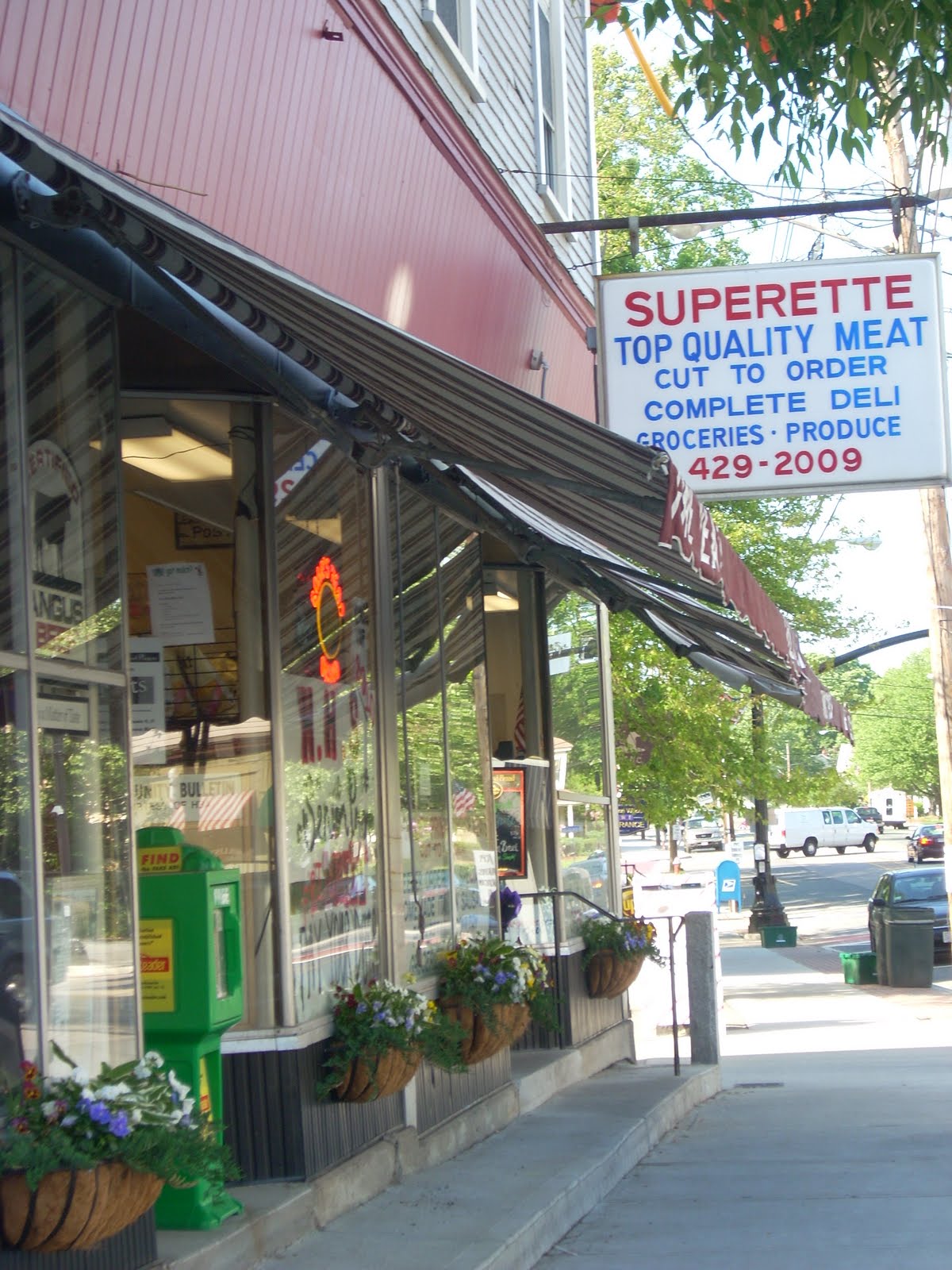
But before I get into the recipe, I MUST give a MAJOR shout out to the Holliston Superette, my local butcher shop that has been an invaluable resource to me as I've embarked on this project. Hereto-with, "my" Superette:


The Holliston Suprette - A Real Life, Full Service, Seriously Awesome Butcher Shop and Marktet


Chris, who runs the show and makes the place fun


Original Memorabilia on the walls


Now for the Food...an exotic combination of spices
Haddock (fresh off the truck) and Parsley

A slightly over exposed photo of Machbous - delicious, light, aromatic and healthy!

And now for the recipe, Machbous which is Bahrain's most traditional dish. It can be made with lamb or fish, served with rice.

Machbous

  • 1 tsp. ground black pepper
  • 3/4 tsp. ground corriander
  • 3/4 tsp. ground cinnamon
  • 3/4 tsp. ground cloves
  • 1 tsp. ground cumin
  • 3 cardamon seeds
  • 1/8 tsp. ground nutmeg
  • 1 1/2 tsp. paprika
  • 2 lbs. fish or lamb
  • salt
  • 2 Tbsp. oil
  • 2 onions, chopped
  • 1 can diced tomatoes
  • 2 Tbsp. parsley, chopped
  • 1/2 tsp. grated lime peel .....(people, anything with lime rocks)
  • 1/2 tsp. ground turmeric
  • 2 cups rice
  • 3 1/2 cups water

Mix the black pepper, coriander, cinnamon, cloves, cumin, cardamon, nutmeg and paprika and set aside.

Saute the onions in the oil, add the lamb or fish and cook till brown (if you're using fish, only cook for a 2-3 minutes). Add the spice mixture, the tomatoes, parsley, lime and turmeric. Mix well, bring to gentle boil, then reduce heat and simmer covered (15 minutes for lamb, 5 minutes for fish). 

Serve over rice and enjoy! Final assessment - a delicious, simple, satisfying meal I highly recommend!


Top 20 Cooking Myths

Cooking Myths
There are lots of myths in regards to cooking. Sadly, they tend to discourage people from practicing a very basic life skill. Here are the myths about cooking that I have heard repeatedly from friends, acquaintances and even cooking pundits. Are any of them keeping YOU out of the kitchen?

1. You can't cook anything good in a short amount of time
You don't need to cook something complicated or cutting edge (unless of course you want to!), plenty of great recipes take very little time at all. Here are just a few examples:

Asparagus Frittata from Simply Recipes
Black Bean Clams from Single Guy Chef
High-roast Chicken and Potatoes from Hedonia
Grilled Tri Tip Steak with Chimol Salsa from Kalyn's Kitchen
Orechiette with Sausage and Kale from The Kitchn
Whole Wheat Spaghetti with Aglio e Olio from Skillet Chronicles

Choose from steak, chicken, pasta, seafood, some dishes are even vegetarian--all are delicious!
2. Cooking takes too long
I don't know what "too long" means. But I can cook dinner faster than you can get it served to you at a restaurant and quicker than it takes to get it delivered. Really. Don't believe me? Revisit the recipes above.

3. You need lots of ingredients There are tons of recipes that use 5 ingredients or less. Just check out this collection on Epicurious. Or just revisit the recipes above, the ingredients for those recipe would fit in a single grocery bag.

4. Cooking is not enjoyableCooking can and SHOULD BE ENJOYABLE! It's not just a necessity, it's actually fun or why would so many bloggers (myself included) be droning on about it endlessly?

5. Cooking is hard
Cooking in a restaurant is hard work. Cooking at home does not need to be hard. If you don't believe me, see Michael Ruhlman's sarcastically named, World's Most Difficult Roasted Chicken Recipe.

6. You need to use processed foods to save time, effort and moneyProcessed foods actually cost more than raw foods, not less. They do not necessarily save you time. The Kitchn did a test to see what the difference was between making a cake from scratch and from a mix. The results will surprise you!

7. Cooking from scratch is expensive, even more than eating outCheck out this blogger's challenge to create $2 a serving meals.

8. Cooking requires a lot of skill
Nope. Even dummies can cook French food.

9. You need expensive pots and pan to cookThe Breakaway Cook shows you how to use some of the cheapest pans around, cast iron.

10. You need lots of expensive knives to cookThree knives. That's all you need! And this from a restaurant blogger.

11. You need a very well-stocked kitchen to cook
A basic pantry doesn't need to be overflowing with ingredients. Not sure where to start? Check out this primer on Slashfood.

12. Good cooks never use recipes
There are cooks who advocate ratios rather than recipes, but you know what? They too use recipes too sometimes.

13. Good cooks always use recipes
Pastry chef and blogger Shuna Lydon dispels this myth, thoughtfully and provocatively.

14. Cooking is too messy
Yes, cooking can be messy. But you should be able to clean everything in your kitchen. Keeping your kitchen clean is not a good reason for not cooking!

15. Cleaning up takes longer than cooking so it's not worth the effort
The secret is to clean as you cook, just ask Martha.

16. Cooking is too dangerous for kids to do
When kids learn to cook with adult supervision it's not dangerous. Check out What's Cooking Blog to learn more about cooking with kids.

17. Cooking is fattening and leads to overeating By cooking you can control and be aware of exactly what is in your food. I guess if you cook well you might be inclined to overeat, but that's about will power, not cooking!

18. You must follow recipes exactly or they won't workIf that was true you would never see the word "adapted" next to recipes.

19. Cooking is menial or dullIn the 1950's women were told that cooking was a chore and not worth the effort. Laura Shapiro writes about the phenomenon in Something from the Oven. But cooking was and is something truly enjoyable. Cleaning might be menial and dull, but cooking is a joy. The classic cookbook that proclaims it so has sold over 18 million copies!

20. Cooking for one is not worth the effortLegendary cookbook editor Judith Jones would beg to differ. She's the author of The Pleasures of Cooking for One.

Wednesday, May 19, 2010

Day 13 - Bahamas!

Every once in a while, my mood syncs perfectly with the country I'm cooking in - today was one of those days. The weather was cool and rainy, but I was feeling relaxed and mellow, so what better way to (legally) prolong that feeling than to cook up some delicious Bahamian food?

First, the beautiful country whose rich history is so often overlooked for it's beaches and tourist attractions. One of the things about this venture that I find most gratifying is researching the countries. Aside from the culinary adventure, I have the privilege of talking to and meeting people I otherwise never would have from all over the world.  I feel my own horizons expanding in ways that bring a whole new perspective and appreciation for our diverse planet. Can you feel closer to people and places without ever leaving your house? I think I do. 

Documented Bahamian history begins with the words, "Baja Mar," the name the Spanish bestowed on the islands. This term is misleading, however; it means "shallow sea," but the islands are really mountain plateaus that emerged from the Atlantic hundreds of thousands of years ago. As they grew, they hosted countless generations of coral, which today comprise the islands' limestone base.

The "Lukku-cairi" or island people, as they called themselves, were the first settlers. Originally from South America, they meandered up through the Caribbean and finally arrived in The Bahamas around the Ninth Century AD. Known as Arawaks, they are also called "Lucayans" and "Indians"- a label bestowed by Columbus, who mistakenly thought he found the East Indies when he dropped anchor in San Salvador in 1492. Once again, that evil dude invaded and exploited the indigenous people.

Next, English settlers who left Bermuda in 1647 searching for religious freedom formed the first British colony on the Island of Eleuthera, and began a prosperous agricultural economy that still thrives today. Britain then recognized them as a colony in 1718. During the Civil war and Prohibition, the Islands became popular for rum running and eventually served as an air and sea way-station in the Atlantic during WWII. When Cuba was closed to US tourists in the 1950's, The Bahamas forged ahead to become one of the world's most popar tourist destinations. 

Now for the food: I LOVE curry, so decided to make Curry Goat and Pigeon Peas with Rice.

 Goat is tough, so I marinated it overnight in a mixture of scallions, onions, garlic, Scotch Bonnet peppers and curry.


Brown the meat in a large pot, then add broth and coconut milk - that's what I'm talkin' about!

And here are the ingredients for the Pigeon Peas and Rice: peppers, garlic, scallions and thyme sprigs

My spice rack, which was already pretty full, is now completely packed


 Having way more fun than I ever could  have imagined

Curry Goat

5 pounds goat meat, cut into bite sized pieces
1 bunch of scallions, chopped
3 large onions, chopped
3 Scotch bonnet peppers, minced. (For less heat, seed the peppers and remove the veins.)
1 teaspoon allspice
salt to taste
black pepper to taste
About 6 tablespoons curry powder (more or less to taste)
2 tablespoons butter
1/4 cup frying oil of your choice
2 garlic cloves, minced
4 cups chicken stock
1 cup coconut milk
Juice of 2 limes

In a large bowl, combine the goat meat, scallions, half of the onions, 1-3 Scotch bonnet peppers, allspice, salt and pepper, and 4 tablespoons of curry powder. Mix the ingredients together, coating the pieces of goat well with the mixture. Cover the bowl and place it in the refrigerator to marinate overnight.

The following day, remove the goat meat from the refrigerator and set aside. Place a large soup pot over medium high heat. Add 1/4 cup frying oil. When the oil is hot, add two tablespoons of curry powder to the pot and stir it into the oil. Cook the curry powder for a few minutes, stirring it constantly and taking care that it does not burn.
Add the remaining onions and cook them until they are translucent. Add the garlic and the seasoned goat meat to the soup pot and mix well to combine all of the ingredients.

Add the stock, the coconut milk and the lime juice.

Bring the mixture to a boil, then turn down the heat, cover the pot and simmer the goat meat for 2 or3 hours (or until the meat is very tender), adding water as needed.


Curry Powder

5 teaspoons ground turmeric
4 teaspoons coriander seeds
3 teaspoons cayenne
3 teaspoons fenugreek seeds
2 teaspoons cumin seeds
2 teaspoons whole black pepper
2 teaspoons star anise or aniseed
2 teaspoons yellow mustard seeds
1 whole clove, minced
1 teaspoons ginger
1 teaspoon grated nutmeg
1 teaspoon whole allspice.
Combine all ingredients and mix them together well. ( A mortar and pestle are great for blending the ingredients.) Store the curry powder in a tightly sealed jar away from heat and light.


Pigeon Peas and Rice

1 Cup peas (canned or dried)
2 Cloves garlic
5 Sprigs fresh thyme
2 Cups rice
4 Cups water
1 Red or green bell pepper
2 Scallions
1/2 cup diced bacon
1 TBSP tomato paste

Cook the peas (if using dried)

Fry bacon in medium pot
Add scallions, garlic and peppers and cook for 3-5 minutes
Add salt and pepper, thyme and tomato paste
Add peas
Add rice with 4 cups water
Bring to a boil
Reduce heat and cover till water absorbed and rice is cooked.

Anthony Boutard on What Makes Fruit Great?

Anthony Boutard of Ayers Creek Farm
One of the best presentations I got to attend at the International Association of Culinary Professionals conference in Portland last month was a conversation between chef and cookbook author Deborah Madison and farmer Anthony Boutard of Ayers Creek Farm. Ayers Creek Farm is an organic farm located in Gaston, Oregon in the Wapato Valley 10 miles west of Beaverton and 40 miles from the ocean. The theme was fruit and I learned so much! Here are a just a few highlights from the discussion:

Deborah Madison asked, "What makes fruit great?"

• Boutard said, in some ways it's hard to say because everyone's palate is different; for example some people love tart marionberries, some people hate them.

• According to Boutard, the best fruit has acidity upfront. Acid and tannins in fruit are complex and cannot be simply duplicated by adding lemon juice. Sweetness on the other hand is not very complex.

• Shipped fruit seems like it loses acidity (another reason to buy local).

• The best way to get shoppers to warm up to fruit with high acid, is to give samples to their kids. Kids love acidity!

• Some fruit are best suited to wide temperature variation, such as melons and plums that want hot days and cool nights. Different plums grow in different parts of the country. In California there are lots of Japanese plums and in Oregon more European plums.

• Cellared fruit takes on different characteristics. It won't have the same texture, it may not be crisp, but the flavor can be amazing. Boutard said the best apple he ever ate was a russet apple in Switzerland, it had been cellared for many months and was mealy, but complex and delicious.

• Grapes with seeds have more flavor and nutritional value. Boutard calls grapes "celibate" or "fecund" instead of seedless or seeded. A little sex helps sell! Grapes with seeds don't last as long as seedless varieties but the seeds are worth eating too. You can't eat Concord grape seeds but other grape seeds have a spicy flavor that balances the sweetness of the fruit.

• Picking fruit takes real skill. For example, some fruit needs to be watered the night before picking, such as raspberries, other fruit like plums will split if watered when already ripe. Boutard has been working with the same Oaxacan family for years because they understand how to pick fruit.

• Systemic pesticides and fungicides cannot be washed off fruit. Boutard chooses to grow fruit that is well-suited to the environment and can be grown organically rather than fight mother nature.

• Machine picked fruit is not as fully ripe because it is picked using beaters.

• The best way to judge the quality of most fruit, is to smell it. Don't look at the size. The first batch of fruit often has more pectin in it that the subsequent crops.

Tuesday, May 18, 2010

Numi Puerh Tea

Numi puerh
I have become a puerh pusher. Anyone who takes so much as a whiff from my cup, ends up buying their own. I discovered puerh tea a few years ago at a wonderful tea shop, Modern Tea, run by tea expert Alice Cravens, (now sadly closed). It was served in the traditional manner in a tiny tea pot with tea broken from a cake of puerh. Not long after I purchases some loose puerh tea from Tillerman Tea in Napa. But it's the perfect-for-sampling Numi Tea tea bags that have made me go pro.

Puerh is a fermented and aged green tea that has many of the characteristics of black tea and more antioxidants than either black or green tea. It is dark and malty with rich flavor that can handle a splash of milk. Up until recently it was almost impossible to find high quality puerh tea bags. Normally I buy all my tea loose leaf, bulk, never in bags, but Numi Tea is making some fabulous puerh tea blends, available in bags. They use whole leaf tea, not dust. The convenience of tea bags has worked well for me because I am usually just drinking one cup and I often take a few bags in my purse and my suitcase.

Back in January I participated in Numi's Puerh Challenge. I didn't drink three cups a day because it's just too much caffeine for me. But I quickly added to my stash buying boxes of Magnolia Puerh and Emperor's Puerh to my favorite the Chocolate version. The Numi Chocolate Puerh tea is a blend of all organic ingredients--puerh tea, cocoa powder, vanilla, Theo chocolate cocoa nibs, rooibos, orange peel, nutmeg and cinnamon. It is such a treat! It has lovely spicy notes that pair with the mild chocolate and rich tea.

For a more delicate tea I like the floral Magnolia blend which has green tea and magnolia flowers along with the puerh. The Emperor's version is pure puerh, nothing else added. It is the most robust with toasty rich flavor, great when you feel like you want a cup of coffee. The only version I'm not crazy about is the Mint Puerh, but to each his own. Numi also sells puerh in a brick and in bulk, which is probably what I will end up purchasing next. The advantage to the brick is that a small amount of tea can be used again and again, to make up to 4 cups of tea.

Puerh is considered a very healthy tea, potentially strengthening your immune system and reducing the risk of heart attack. Other studies show tea can reduce cholesterol and triglycerides and lower blood pressure. I would love to tell you I lost weight drinking this tea, but I don't think I did. But it absolutely gets me going in the morning on those days when I need a little extra boost and the different varieties seem to fit my mood at different times of the day.

Monday, May 17, 2010

Mango Cucumber Salad Recipes

Mango Salad
Ok here's a crazy idea, one basic salad that can be either sweet or savory. I was trying to think of what to do with some mangoes coming my way from the National Mango Board this week and then I saw a tweet from @SimpleGourmetLA with the idea for a "mojito cucumber, mango and strawberry salad." It occurred to me that both cucumber and mango could go either way--sweet or savory.

I'm always looking for ways to use common ingredients in slightly unexpected ways. Here the twist is using cucumber in a sweet fruit salad and using sweet mango in a savory salad. English cucumber is available year round and does not need to be peeled. It has a very mild flavor and a fine texture without big slippery seeds. Best of all, it has a terrific crunch! I used the most commonly available mango, the Tommy Atkins variety in both salads. It's not a very tropical, luscious or creamy mango, but more of a workhorse, with citrus-like flavor, able and willing to stand up to whatever you demand of it. It's a bit on the firm side so it's particularly good in salads.

For the sweet salad I combined cucumber, mango and strawberries and for the savory version, cucumber, mango and radishes. You might recognize the ingredients from the savory salad as being similar to what you find Mexican street vendors selling. Each salad is flavored with lime, but the sweet salad gets a touch of honey and mint, the savory salad, a pinch of salt and green onion. Both are bursting with juiciness, crunch and Summery flavors and would be great at a picnic. I'd serve the savory salad with grilled fish or chicken. I'd serve the sweet salad with a scoop of sorbet or just a couple of cookies.

Sweet Mango Salad
Mango, Cucumber, Strawberry SaladServes 4

Ingredients

1 Tommy Atkins mango, peeled, pitted and cut into chunks
1/2 large English cucumber, cut into chunks
1 pint strawberries, trimmed and cut in chunks
Juice of a fresh lime, squeezed
2 teaspoons honey
2 sprigs chopped fresh mint leaves, about 12 leves

Instructions

In a mixing bowl combine the lime and honey and stir until smooth. Add the mango, cucumber, strawberries and mix. Sprinkle with mint and taste for seasoning before serving.

Savory Mango Salad
Mango, Cucumber, Radish Salad
Serves 4

Ingredients

1 Tommy Atkins mango, peeled, pitted and cut into chunks
1/2 large English cucumber, cut into chunks
1 bunch radishes, trimmed and cut into chunks
1 green onion, thinly sliced
Juice of a fresh lime, squeezed
Pinch kosher salt

Instructions

In a mixing bowl combine the lime and salt and stir until dissolved. Add the mango, cucumber, radishes and mix. Sprinkle with green onions and taste for seasoning before serving.

Enjoy!

Saturday, May 15, 2010

Day 12-Azerbaijan! The last of the "A" countries. Up next, Bahamas, baby!

Ahhhh, the last of the "A" countries...Azerbaijan. How many people (besides our brilliant Verizon Repair Technician, who not only knew that Andorra was a country but knew where it was), know anything about Azerbaijan? Embarrassingly, I didn't, but now I know a little about it's ancient history, culture and amazing food. First the location and a VERY brief history:
About 5,000 years old, Azerbaijan was occupied by Iranian Sasanids and in the 7th century by Arabian Khalifat.  In the second half of the 18th century Azerbaijan broke up into smaller states - khanates and sultanates.By the end of the 18th century Iran was under the rule of Gadzhars, an Azerbaijani dynasty. Skipping way ahead, the modern history of Azerbaijan contains one more significant page - Armenia - Azerbaijan conflict over annexation of the Nagorno-Karabakh Autonomous Republic . Having declared itself  an independent democratic state in 1991, Azerbaijan lost its 6 areas, including Nagorno-Karabah Autonomous Region. In 1994 the countries signed the cease-fire treaty and on August 30th, 1991 Azerbaijan became an independent state.

Traditional food in Azerbaijan includes bread, pancakes and thick soups. Pilaff (plov), both savoury and sweet, is a favourite in Azerbaijan. The savoury pilaff is prepared using rice with meat, or fish, and vegetables and spices; the sweet version often contains dried apricots and raisins (which are also used on occasions to flavour meat recipes). So that's what I made: Parcha-Dosheme Plov or, layered rice pilaf with dried fruits and chestnuts:

 The process for preparing the rice had many steps: rinse it, soak it, then steam it. It's cooked by layering chicken, onions, rice, fruit and more rice. Then the whole thing is steamed and saffron is added at the end.


 Chopping the onions


Cakes and sweets include baklava and halva. Fruits available are apples, cherries, grapes, melons, raspberries, plums and peaches. I decided to go for the baklava, but a simplified recipe:


Make the dough, roll it out, chop the walnuts, layer the dough with filling, bake - awesomeness
Not in the recipe, but it's Saturday night , right? 


The windowsill over my sink - not in the recipe either, but so what, I like the picture, it's my blog, so I put it.

Here's the link to the recipes: http://www.azcookbook.com/layered-rice-pilaff-with-dried-fruits-chestnuts-parcha-dosheme-plov/ 
and for the baklava: http://www.azcookbook.com/easy-baklava/

The final analysis:  Everyone loved the rice pilaf and my kids asked me to make the baklava every night....and the best part? They now know some of Azerbaijan's history AND where it is on our beautiful world map...sure beats World History 101.