-->

Monday, September 12, 2011

Is Hunger a Taboo Subject?

Cabbage from the San Francisco Food Bank
Hunger ChallengeThe first year I participated in the Hunger Challenge, one of my commenters basically said that anyone who was hungry in this country was lazy. I was also told by a blogger that she wouldn't participate in the Challenge because it was her personal goal to support organic farmers and the Hunger Challenge just encouraged support of an already broken food system. In subsequent years I have heard that hunger is a bigger issue in other parts of the world, and that childhood obesity is the real problem we should be focused on.

The goal of the Hunger Campaign is to raise awareness about hunger in the San Francisco Bay Area. Participants in the Challenge live on the same budget a food stamp recipient would receive, a paltry $4.72 a day. But somehow, I find many people I tell about the Challenge don't want to hear about that. They'd rather focus on something else. All those other issues - politics, sustainable food systems, organics, world hunger and even childhood obesity get way more attention in the media than local hunger. Yes. I said local hunger.

Here in San Francisco, according to the San Francisco Food Bank, 197,000 people struggle to feed themselves and their families. In Marin, just over 40,000 people - or 16% of the population - face the same problem. 
I find it shocking that in a community as rich as ours (San Francisco and Marin), 237,000 people live at or below 185% of the federal poverty line ($33,873 per year for a family of three). While children or families may be eligible for aid at that level, even with assistance it can be very challenging to provide enough food to consistently nourish themselves.

Won't you think about what you can do help alleviate hunger in your community?

GET INVOLVED!

♥ Take the Hunger Challenge yourself. Sign up here.

♥ Read blogs by people taking the Hunger Challenge. There's a blogroll here.

♥ Follow the Hunger Challengers on Twitter. There's a listing here, or search for the hashtag #HungerChallenge.

♥ Learn more about the San Francisco Food Bank - and make a donation. For every $1 donated the food bank can supply hungry people with $6 worth of food!

♥ Follow the San Francisco Food Bank on Twitter or visit their Facebook page to see how they're fighting hunger every day.

Shopping for the Hunger Challenge

Foods Co

Hunger ChallengeThere will be no coffee, no tea, no chocolate, no ice cream this week. No matter how much I stretched my budget shopping at less expensive stores this year, some things are just out of the question. In the past I have shopped at Safeway and at Whole Foods for the Hunger Challenge. This year, I did my primary shopping at what is considered a "price-impact warehouse store" Foods Co and picked up a few bulk items at Rainbow Grocery (a coop). What exactly is a price-impact warehouse store? Warehouse stores are often located in low rent areas, have spartan, warehouse style interiors and most importantly, low prices. They are not as service oriented or as high priced as traditional supermarkets.

Shopping at Foods Co was eye opening. The demographic of their shoppers is clearly not the typical supermarket shopper. I saw mostly Asian and Latino shoppers many who were not speaking English, primarily young families and some older couples. The store was bustling on a Saturday and people were clustered around the sale items and comparison shopping, looking at prices. More than once I heard someone talking about pay day. One woman complained about the price of chicken. She told me she has a small refrigerator and freezer now and cannot buy the larger "value packs."

While prices for some things were good, the quality of the produce was not consistently high. The pears, 4 pounds for a $1, were small and hard, and many had cosmetic imperfections. I couldn't find one good eggplant. They were all old, wrinkly, many with mushy brown spots. There were virtually no organic products. When I couldn't find something employees pointed me in the general direction but never stopped what they were doing to help me.

My initial shopping list of items cost me $40 at Foods Co would have cost $65 at Safeway (according to my virtual shopping cart on Safeway.com). Bottom line: Foods Co = CHEAP.

At Rainbow Grocery I bought bulk items that I would not have otherwise been able to afford such as extra virgin olive oil, roasted soy nuts, raisins and couscous.

groceries

Here is my entire shopping list for two people, for one week:

Foods Co
Cilantro .33
Turnip greens .78
Lemon .33
3 yogurts 1.00
Bok choy .41
Chile peppers .88
Green onions .33
Mixed fruit (12 apples, oranges) 3.98
Bartlett pears (6 very small) .48
Ginger .27
Mushrooms 1.98
Rice 1.98
Chicken thighs (10) 4.04
Chili powder .99
Italian style canned tomatoes .98
Mexican style canned tomatoes .98
Canned corn .75
Bouillon .98
Milk (quart) 1.48
Red beans (1 lb bag) 1.25
White bean (1 lb bag) 1.25
Lentils (1 lb bag) 1.28
Eggs 2.50
Corn tortillas (30) 1.08
Salsa 1.50
Instant oatmeal (10 packs) 1.98
Pasta .25
Panela cheese (10 oz) 3.18
Quesadilla cheese (10 oz) 3.85
Garlic .49
Bacon (12 slices) 3.50
Italian seasoning .98
Zucchini (1 small) .68
Onions (3 large) .65

TOTAL $47.74

Rainbow Grocery
Extra virgin olive oil 2.31
Cinnamon .31
Couscous 2.17
Raisins 1.21
Soy nuts 2.19
Frozen spinach 1.59

TOTAL $9.73 (with bag credit)

GRAND TOTAL $57.47

Note: The total budget for 2 people is 66.08, but my husband is only partly participating in the challenge. I will price out my meals.

Day 161! Sierra Leone - Corned Beef and Yam Cakes - Up Next, Singapore


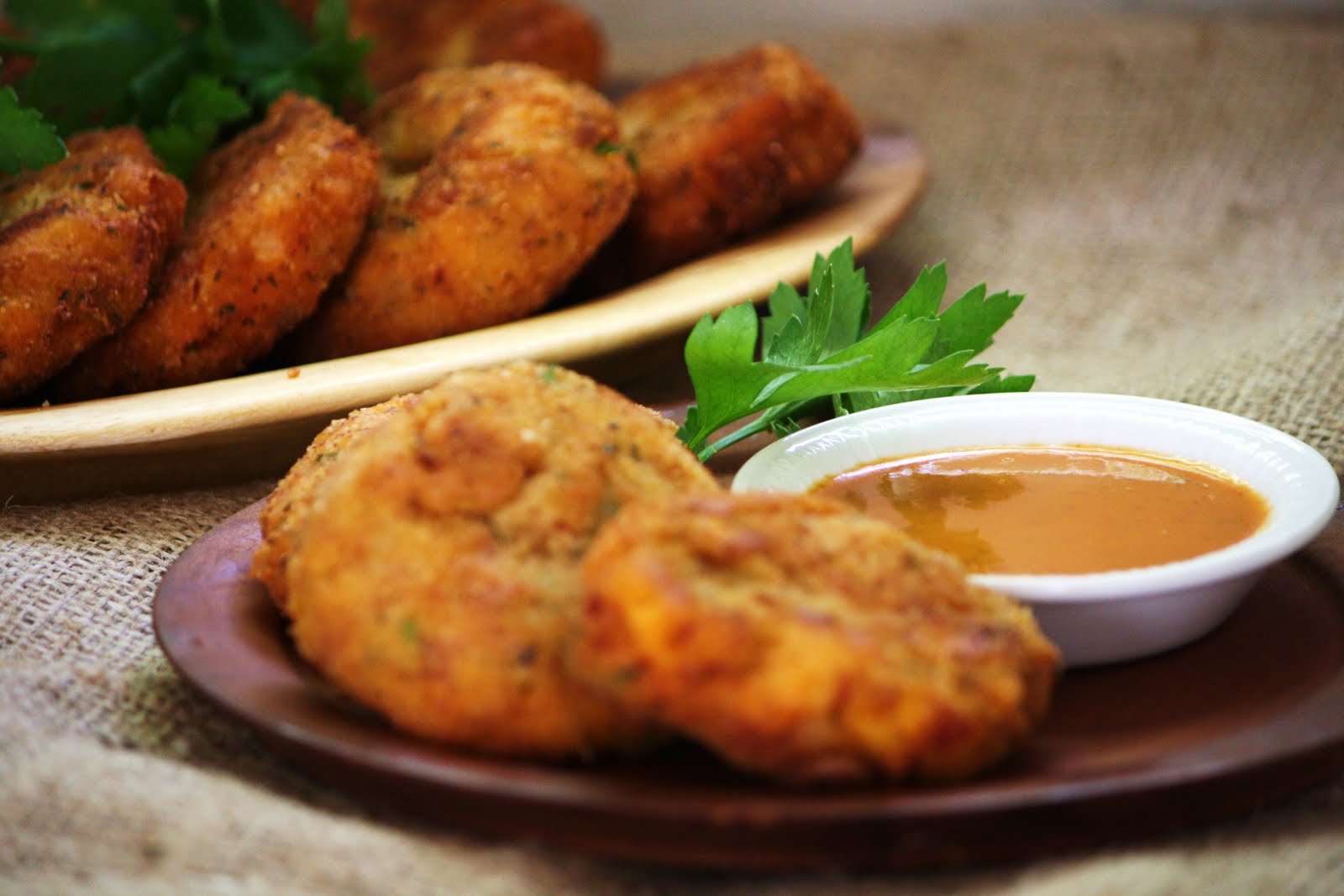
Unlike the United States where most of our culinary traditions focus on special holidays, very specific preparation, utensils, process and form are the norm in many, many foreign countries. In Sierra Leone for example, tonight's meal of Corned Beef and Yam cakes, would likely have been prepared by women, using  a large pot, supported by three stones over a wood or charcoal fire. In fact, when I first started cooking in African countries back in 2010, I dug such a fire pit so I could try to replicated this process, which I highly recommend no matter what you like to cook - to see it, click here. Families in Sierra Leone generally congregate around a large dish of food, which almost always consists of rice, a small amount of fish or meat and sauce or gravy for dipping. After washing their hands, each person eats from the area directly in front of them or the middle of the platter, using their left hand only. Reaching across the platter is considered bad manners, as is using ones right right hand. Moreover,  a lot of conversation is considered disrespectful to the food. The oldest male gets the best piece of meat, followed by younger males. The balance is left for the women and girls.

Located in West Africa, Sierra Leone is bordered by Guinea, Liberia and the Atlantic Ocean. Orignally inhabited by the indigenous Sherbo, Temme, Limba, Mende, and Komo, the island was first discovered by Pedro da Cintra, a Portuguese explorer in 1462, during which time it became a transatlantic slave trade center. In March, 1792, Freetown was founded by the Sierra Leone Company for formerly enslaved African's. In 1808 it became a British Crown Colony and by 1896, a British protectorate. Finally in 1961, the two regions merged and gained independence. The country is made up of 4 provinces, Northern, Southern, Eastern and Western, which are comprised of 14 districts and 149 chiefdoms.There are approximately 15 ethnic groups, each with their on distinct languages and customs, however religious tolerance and intermarriage between Muslim and Christian faiths is widely accepted.

One cannot talk about Sierra Leone's history without mentioning the 1991-2002 Civil War that killed and/or mutilated more than 75, 000 people. The country's long history of diamond, bauxite and gold mining has long been a source of exploitation by those who mercilessly profit from the country's natural resources and exploit its people. This corruption, mismanagement, economic collapse and the dismantling of the educational system all contributed to one of the bloodiest and most tragic civil wars in the world's history.

Sierra Leone's tropical climate ranges from savannas to rain forests. Cassava, palaver sauce, red palm oil, onions, peppers, fish, meat stews, okra and ground nuts are all grown and consumed in this country. As mentioned above, rice is the staple starch in nearly every family, and large amounts of meat and fish are not common at the dinner table.

Peel the yam, sweet potatoes or potatoes, boil until soft and mash


Prepare the egg-milk mixture and the bread crumbs


The recipes calls for tinned corned beef, but I used fresh and minced it (my son works at a deli!)


Combine ingredients and add 2 Tbsp. of the egg mixture to bind everything
 
Brush cakes with egg mixture - don't attempt the dip method - I did and they fall apart


Get your oil good and hot and fry four at a time, turning once, until golden brown


Serve alongside hot sauce...I love this Peri-Peri sauce fromt he folks at Rhino


Corned Beef and Yam Cakes (recipe courtesy of Africaupenn.edu)

1 pound potatoes or yams
salt and pepper to taste
1 small onion, chopped
2 eggs, beaten
1/4 cup milk
7 ounce can corned beef (I used 1/2 lb. fresh)
2 cups bread crumbs for coating
Oil for frying
1 tsp. cayenne pepper, optional
1 tsp. finely chopped parsley

Peel potatoes or yams.
Boil in salted water until tender; drain and mash.
Add pepper or cayenne, chopped onions, parsley and corned beef.
Add milk to eggs and whisk.
Add 2 Tbsp. of the egg mixture into the yam mixture and blend well.
Scoop up about 2 Tbsp. yam mixture and form into flat cakes.
Brush with egg mixture, then coat with bread crumbs.
Fry in hot oil until golden brown, turning once as needed.
Drain on paper towels.
Serve with peri-peri or hot sauce of your choice.

Final Assessment: These were absolutely wonderful. They could easily be vegetarian by leaving out the corned beef and I honestly don't think you'd miss it all. I love the sweetness of the yams and the addition of cayenne gives them a great kick. Like any croquet, they're best fried in good hot oil so they don't float around soaking it all up. Once deeply golden brown, all they need is a little sea salt and a good sized dipping dish of peri-peri or hot pepper sauce. Served along side rice and a vegetables, they make a great meal. Except we just ate them as soon as they were cool enough to handle and called it dinner.

© 2010-2011, What's Cooking in Your World? Sarah Commerford/All Rights Reserved

Sunday, September 11, 2011

Planning for the Hunger Challenge

Planning for the Hunger Challenge
Shopping on a tight budget isn't impossible, but it does take work. Yesterday I started planning for the Hunger Challenge, a campaign to help raise awareness about hunger in our community. For one week during Hunger Action Month participants live on a very limited food budget, comparable to what food stamp recipients live on. In 2008 just seven of us participated in the Hunger Challenge and the budget was $3 a day, this year there will be over 50 250 people participating and the budget is $4.72 per day.

Tomorrow I will be shopping with CBS reporter and Hunger Challenge participant Juliette Goodrich at Foods Co. Yesterday I read the Food Co weekly flyer and planned my menu based on sale items and what I know I can afford.

Here is what I plan on cooking and eating, for new dishes I will post the recipes throughout the week:

Dinners:
Panela and Vegetable Kabobs - a new recipe I will be creating for the challenge. Panela is a cheese similar to haloumi but much less expensive.

Chicken and Bacon Quesadillas - another new recipe that I am creating for the challenge.

Chicken and Rice Soup - past participant Vanessa Barrington made this recipe a few years ago l based on a recipe by Andrea Nguyen

Moroccan Chicken & Lentils - I will be modifying a Bon Appetit recipe I found on Epicurious

Pasta Fagioli - truly cucina povera, something I made the first year of the Hunger Challenge, but this time I think I will add some spinach

Chili - I will make this using a variety of beans, corn, onions and peppers

Red beans and rice
For breakfast, I will eat oatmeal or eggs

For lunch I will eat leftovers or quesadillas. In past years, I have eaten peanut butter and jelly sandwiches, but I just don't want to do that again.

Of course my plans may change depending upon what I find at the store and how much I can buy...

Hunger Challenge 2011

Creamy Spinach Artichoke Dip with Seasoned Dippers


Great for entertaining hungry guests or spending a lazy Sunday on the couch, spinach artichoke dip is always a classic. By using the right cheeses, garlic and spices, we’ve created a creamy version of this dip that we can’t resist. Pour it in a bread bowl, and add in some seasoned, baked bread squares for dipping, and you’ve got an appetizer that both looks and tastes awesome!

Ingredients
Dip:
5 tablespoons butter
3/8 cups flour
2 cups whole milk
¼ tsp salt
¼ tsp fresh ground black pepper
1/8 tsp cayenne pepper
1/8 tsp paprika
½ cup grated parmesan cheese
1 cup shredded Monterey jack cheese
½ cup shredded Fontina cheese
2 tablespoons olive oil
1 cup chopped white onion
10 oz fresh spinach
1 tablespoon minced garlic
1 (15 0z) can artichoke hearts, rinsed, drained, and julienned
1 tablespoon butter, chopped into small pieces
½ cup parmesan cheese
½ teaspoon pepper

Seasoned Dippers:
round loaf of bread
olive oil
salt
pepper
paprika
cayenne pepper


Instructions
Preheat the oven to 400 degrees. Warm the two cups milk. Melt butter over medium heat and stir in the flour to make a roux. Whisk in the milk and season the liquid with salt, pepper, paprika and cayenne. Whisk the liquid for 3 to 5 minutes, or until the liquid is thick and coats the back of a spoon. Remove the sauce from the heat and stir in the cheeses. Set the sauce aside.

In a sauté pan, heat the olive oil. When the oil is hot, add the onions and sauté for 2 minutes. Stir in handfuls of spinach at a time, until all the spinach is incorporated. Add the garlic and artichokes, and sauté for 2 minutes. Season the vegetables with salt, pepper, paprika and cayenne. Remove the vegetables from the heat and turn into a mixing bowl. Fold the cheese sauce into the vegetables. Turn the mixture into a baking pan. Sprinkle the pieces of butter on the top. Sprinkle ½ cup parmesan cheese and about ½ tsp of pepper of on the top as well. Bake the dip for 10 to 15 minutes, or until the top is golden brown.

To make the dippers, I like using a round loaf of bread so that I can use the hollowed out loaf as a bread bowl for serving. Chop up the bread from the cut-out part of the loaf into bite size pieces. Place in a mixing bowl and coat with oil, and sprinkle with salt, pepper, paprika, and cayenne. Turn out in a single layer on a baking sheet and bake at 350 degrees for 10-15 minutes, or until they get toasted.

Saturday, September 10, 2011

Day 160.5 Kouign Amann (Caramelized Breton Pastry)


Last night while scrolling through my Facebook feed, I happened on a post from Chow.com entitled,  Kouign Amann, Your New Favorite Pastry. The teaser read:  "The hottest pastry in America right now is one you probably can't find, much less pronounce." The article spotlighted the Starter Bakery in Oakland, California that's now making Kouign Amann to rave reviews. Aside from the word "pastry", the bait was the key word "can't" which I took without a second thought.  Ask anyone in my family, and they will testify that from the time I was old enough to be told what I couldn't or shouldn't do ( probably as soon as I learned to walk), I set out to very deliberately prove that I most certainly could and would. Needless to say, this stubborn streak persisted through a rather, "I can and you can't stop me" adolescence (sorry, Mom) and has now become what some in my immediate family might describe as, "Mom doing Mom". And, while I have failed many times at whatever it was I may have been attempting to do,  I still keep trucking - because I can, and because I love a challenge almost as much as I love butter and caramelized sugar, both of which Kouign Amann has in abundance.

So, I ventured into the cloud to find a recipe, and my first hit was David Lebovitz's recipe. A published pastry chef now living, eating and cooking in Paris, I have followed David's blog for several years and regularly drool and laugh (simultaneously), over his posts. I found a few other recipes on-line, but his have never steered me wrong. Below is his unadapted recipe -- because I wouldn't dare mess with it. But I can try to recreate it, and thanks to his great instruction, I did (except I think I my oven may run a little hot and I could have cut the cooking time down by 3 minutes). Merci Mr. Lebovitz , you're the pastry mang par excellence!


A brief word about the origin of Kouign Amann, because, after all, this blog explores food from around the world, and because I always want to know why things are as they are. The name comes from the Breton words for cake (Kouign) and butter (Amann) and is a specialty of the town of Douarmenez in the Finistère region, one of Brittany's 5 provinces. Located in north-west France, Brittany is a large peninsula that sits between England to the north and the Bay of Biscay to the south. It seems that noone knows for sure who invented the cake. Some speculate that it was "invented" when a baker made an unsucessful batch of bread dough and turned it into a cake rather than toss it. Others say that it came to be in the 1860's when flour was scarce and butter was plentiful. Another theory is that during the time that Brittany was actively trading with Norway and Denmark, the Breton's adapted the Nordic custom of eating slightly sweetened bread. For more information, check out David Lebovitz's post about a trip to Brittany.

Lastly, please don't be discouraged by the number of steps in the recipe. It's very, very easy to make (note there are only 6 ingredients), and if you have the couple of hours you'll need to let the dough rest and rise, the reward of this crunchy, buttery, caramelized, beautiful pastry is so worth the time. And, as the original recipe post points out, there's no need to freak about the amount of butter or sugar used - it's less than you'd use making a batch of Toll House cookies - so go for it and enjoy every luscious bite. You can and you should!

The Basics: Yeast, flour and butter make the dough


Roll out the dough: Add butter, fold in thirds, then fold again - mmm...a buttery packet of goodness


Cover a dinner plate with plastic wrap and chill for one hour (go for a run while you wait)

Remove from refrigerator, sprinkle with sugar and roll/pat out to fit pan


Kouign Amann (Recipe Courtesy of David Lebovitz)
(About 8-10 Servings)

1 Tbsp. dried yeast (not instant)
3/4 cup tepid water
2 cups all-purpose flour
1/2 tsp. sea saltx
1 cup sugar (which will be divided later)
(Plus additional sugar for rolling out the pastry)
1 stick salted butter, cut into 1/2-inch pieces and chilled

2-3 Tbsp. additional salted butter, melted
  1. In a medium bowl, dissolve the yeast in the water with a pinch of sugar. Stir briefly, then let stand for 10 minutes until foamy.
  2. Gradually stir in the flour and salt. The dough should be soft, but not too sticky. Lightly dust your countertop with flour and transfer the dough onto it.
  3. Knead the dough with your hands until the dough is smooth and elastic, about 3 minutes. If the dough is very sticky, knead in just enough flour, one tablespoon at a time, until it doesn't stick to your hands.
  4. Brush a medium bowl with melted butter, put the dough ball into the bowl. Cover, and let rest in a warm place for 1 hour.
  5. Meanwhile, line a dinner plate with plastic wrap and set aside.
  6. On a lightly floured countertop, roll the dough into a rectangle about 12" x 18" with the shorter sides to your left and right.
  7. The dough may be sticky and difficult to handle. Use a metal pastry scraper to coax the dough into shape, and a minimal sprinkling of flour, as necessary.
  8. Distribute the butter in the center of the dough and sprinkle with 1/4 cup sugar. Grab the left side of the dough, lift and fold it over the center, then do the same with the right side (as you would a letter). you should have what resembles a 3-level pastry.
  9. Sprinkle the entire length of the dough with 1/4 cup sugar and (without rolling), fold again into thirds as before.
  10. Place on plastic wrap-covered dinner plate and chill for 1 hour.
  11. Next, clean excess flour for the countertop and dust with a liberal handful of sugar for rolling out the pastry again.
  12. Once chilled, remove dough from the refrigerator.
  13. Ease it away from the plastic onto the sugar-covered countertop, using plenty of sugar.
  14. Top the dough with 1/4 cup sugar, press it in a bit with your hands, and roll into a rectangle for the last time.
  15. Again fold it into thirds and let rest in the refrigerator for another 30-60 minutes.
  16. Preheat oven to 425 F. and brush a 9-inch non-stick cake pan with melted butter.
  17. Remove dough from refrigerator. Roll into a circle about the size of the baking pan. It will be sticky; dusting the top with a sprinkle of sugar will help.
  18. Once rolled out, lift the dough and coax it into the pan. If it starts to break, fold in half and slide a metal bench scrape or spatula under it and slip it into the pan. If it does break, gently piece it back together.
  19. Sprinkle with the remaining 1/4-cup of sugar and drizzle with 1 tablespoon melted butter.
  20. Bake for 40-45 minutes until the top is deeply caramelized. Let stand a few minutes, then run a spatula around the edges to release the Kouign Amann and slide the cake from the pan onto a cooling rack.
© 2010-2011, What's Cooking in Your World? Sarah Commerford/All Rights Reserved

Thursday, September 8, 2011

Zucchini Bread with Cream Cheese Frosting


Making zucchini bread and muffins always seems bittersweet to me, a symbol that marks the changing of seasons. With the end of summer nigh and the festivities of fall right around the corner, zucchini bread is a yummy way to mark this transition.  Using shreds of summer produce in warm, spiced bread brings summer and fall together, if just for a moment.

Zucchini Bread
Ingredients:
1 1/2 c flour
1 teaspoon baking soda
3/4 teaspoon salt
1/2 teaspoon cinnamon
1/2 teaspoon nutmeg
1/2 cup brown sugar
1/2 cup white sugar
1/2 cup vegetable oil
2 eggs, beaten
1/2 cup Greek yogurt
1 teaspoon fresh orange juice
1 teaspoon orange zest
1 zucchini, shredded (about 1 1/2 cups)

Frosting
Ingredients:
8 oz cream cheese, softened
4 tablespoons butter, softened
2 tablespoons powdered sugar
1 teaspoon vanilla extract
1 teaspoon orange zest
1/2 teaspoon fresh orange juice

Instructions:
Preheat oven to 350 degrees.  In a bowl, sift together flour, baking soda, salt, cinnamon, and nutmeg.  In another bowl, mix the sugars, vegetable oil, eggs, Greek yogurt, orange juice, orange zest, and zucchini.  Gradually incorporate the flour mixture into the wet ingredients, being careful not to overmix.  Bake in a greased loaf pan for 45 minutes, or until a tester comes out clean.

To make the frosting, beat softened cream cheese, butter, powdered sugar, vanilla extract, orange zest, and orange juice.  Once the bread has cooled, spread frosting.